Choosing an Aluminium Profile Extrusion supplier in 2026 means looking beyond a polished catalog. A profile may appear simple on screen. In production, small differences in alloy, temper, wall thickness, or straightness can affect assembly and performance. The best supplier for one project may not suit another.
This guide to leading suppliers focuses on practical selection criteria, not rankings alone. It considers extrusion capabilities, available alloys, profile complexity, surface finishes, and support for custom tooling. Buyers should also ask about dimensional tolerances, inspection methods, material traceability, and quality documentation. These details help turn a promising quotation into a dependable supply plan.
Capacity matters, but so does communication. A supplier should explain realistic lead times, minimum order quantities, tooling costs, and how design changes may affect production. Requesting samples can reveal details that drawings cannot, such as finish consistency or fit with adjoining parts. Ask clear questions.
Price still counts. Yet a low initial quote may not include packaging, secondary machining, or the cost of delayed deliveries. Compare like with like, and verify important claims directly with each supplier. No shortlist can guarantee a perfect match. Requirements differ, and supplier information can change. Use this overview as a starting point, then confirm current capabilities, certifications, and commercial terms before making a decision.
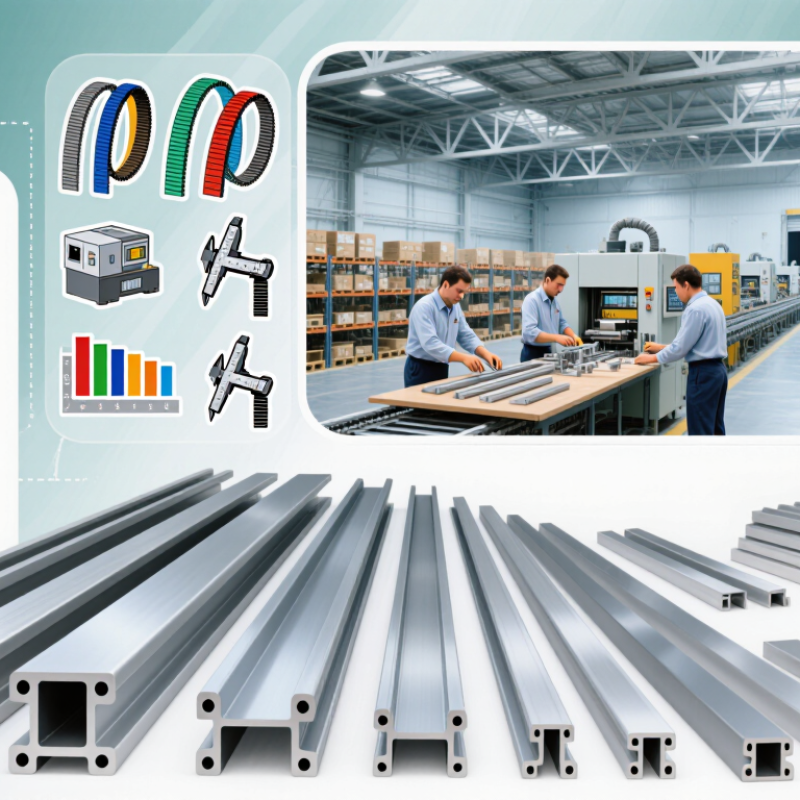
Aluminium Extrusion Explained: 6xxx Alloys, Billets, and Profile Types
2026 Top Aluminium Profile Extrusion Suppliers
Aluminium extrusion begins with a heated billet pressed through a shaped die. Most structural profiles use 6xxx alloys, where magnesium and silicon support strength, corrosion resistance, and heat treatment. The Aluminum Association’s Aluminum Standards and Data describes 6063 as a common choice for architectural extrusions; 6061 is often selected when higher strength is needed.
Alloy choice changes how a profile bends, finishes, and performs in service. Small details matter.
Billet quality matters too. Homogenization helps reduce chemical variation before extrusion, while temperature and press speed affect surface finish and dimensional consistency. The International Aluminium Institute reported 70.6 million tonnes of global primary aluminium production in 2023; the USGS Mineral Commodity Summaries 2025 put 2024 output at about 72 million tonnes.
These figures show the scale of material supply, not the quality of any individual billet. That distinction is easy to miss.
Profile types include solid shapes, hollow sections, and semi-hollow designs. Hollow profiles can reduce weight, but complex die openings may raise tooling demands and require closer process control.
Ask suppliers for alloy temper, dimensional tolerances, and inspection records, not just a catalogue image. I would also check whether the stated tolerance fits the finished assembly; a neat drawing does not guarantee an easy fit on site.
Key Supplier Grades: 6063-T5, 6063-T6, and 6061-T6
For aluminium profile buyers, the temper is as important as the alloy number. 6063-T5 is commonly selected for window frames, trims, and other profiles with fine edges. It offers good extrudability and a clean surface for anodising. T5 means the profile is cooled after extrusion and then artificially aged. A practical check: inspect corners and thin walls for distortion, not just the finish on a flat face.
6063-T6 receives solution heat treatment followed by artificial ageing. Compared with T5, it can provide higher strength, but the actual difference depends on profile shape and processing. Ask suppliers for test reports tied to the ordered temper and dimensions. Small changes in wall thickness can affect cooling and final properties. This detail is easy to overlook.
6061-T6 is often considered when a profile needs greater strength or machinability, such as a load-bearing rail or a part with drilled features. Its extrusion and finishing behavior may differ from 6063, especially in intricate cross-sections. Confirm dimensional tolerances, mechanical test results, and surface requirements using the intended application. A supplier’s grade list alone is not enough. I would also compare sample pieces; paperwork can look complete while a narrow channel still arrives slightly bowed.
Compare Production Capacity by Press Tonnage and Annual Output (t/year)
When comparing aluminium profile extrusion suppliers, press tonnage is a useful starting point, not a production verdict. It describes the force available to push a billet through a die. Larger presses can handle wider profiles or more demanding sections, but they do not guarantee higher usable output.
Ask suppliers to list press tonnage alongside container size, billet diameter, alloy range, and maximum profile dimensions. A 1,800-ton press may suit many architectural sections, while a complex, thick-walled shape could require a different setup. Treat such figures as equipment indicators, not promised capacity. Numbers need context.
Annual output, reported in tonnes per year, shows actual or rated production volume. Confirm which one the supplier means. Ask for recent shipped output, planned maintenance downtime, shift patterns, and scrap assumptions. Finishing capacity matters too: ageing ovens, anodizing lines, and packing areas can limit deliveries even when presses are available. That matters.
Compare suppliers using both press capacity and verified annual output, then check whether those figures apply to your alloy and profile mix. A spreadsheet alone can mislead. Request a sample production schedule and clarify how seasonal peaks affect lead times. Capacity claims can be difficult to compare because suppliers may calculate output differently, so ask them to state the basis in writing.
2026 Top Aluminium Profile Extrusion Suppliers - Compare Production Capacity by Press Tonnage and Annual Output (t/year)
Anonymous, equipment-based comparison. Press tonnage bands below are indicative industry categories, not supplier rankings. Annual output is not reliably determined by press tonnage alone, so supplier-specific figures are marked as requiring verification rather than estimated.
Check Quality Standards: ISO 9001, IATF 16949, and EN 755
2026 Top Aluminium Profile Extrusion Suppliers
Check Quality Standards: ISO 9001, IATF 16949, and EN 755
A supplier’s certificate is a useful starting point, not proof that every extrusion meets your requirements. ISO’s 2022 Survey recorded 1,265,216 ISO 9001 certificates across 188 countries and economies. That scale shows how widely the quality system is used; it does not measure the quality of an individual profile. Ask to see the certificate’s scope, expiry date, and latest audit findings. Then compare them with the process you need, such as billet control, die management, and dimensional inspection. Small details matter.
IATF 16949 is relevant when profiles enter automotive supply chains, where traceability and corrective-action records are important. For technical checks, use the applicable parts of EN 755: Part 2 covers mechanical properties, while Part 9 addresses profile dimensions and form tolerances. Request a recent inspection report for the actual alloy, temper, and profile drawing—not a generic sample. Check wall thickness at several points, especially near narrow cavities and corners. A certificate cannot catch a poorly measured batch. And paperwork can look tidy. The practical question is whether the supplier can link each test result to the production lot and explain what happens when measurements fall outside tolerance.
Rank 2026 Suppliers by Lead Time, Finishing Options, and Cost per kg
2026 Top Aluminium Profile Extrusion Suppliers: Lead Time, Finishing Options, and Cost per kg
A useful 2026 supplier ranking starts with comparable quotes, not attractive headline prices. Request lead times for the same alloy, temper, profile length, order quantity, and delivery location. Separate die production from extrusion and finishing; otherwise, a “four-week lead time” may hide a much longer first order. Ask suppliers for recent median delivery times and on-time performance. Small details matter: a 6-metre profile and a tight-tolerance section may follow different schedules.
Compare finishing options against the actual application. Mill finish may suit hidden structural parts, while anodizing or powder coating can add durability and visual consistency. Record minimum batch sizes, colour limits, and finishing lead times. Then calculate cost per kilogram using the finished, usable weight, including tooling, packaging, and freight where relevant. The cheapest extrusion price may not be the cheapest delivered part.
Material choice also affects the comparison. The International Aluminium Institute reports that recycled aluminium production uses about 5% of the energy required for primary aluminium production. That figure describes energy use, not a guaranteed price reduction; recycled content and alloy availability still need verification. A practical ranking should therefore score lead time, finishing capability, and delivered cost separately. It will be imperfect. Quotes can change, and supplier-reported schedules deserve a reality check.
2026 Aluminium Extrusion Supplier Benchmarks
Indicative comparison by typical lead time and estimated cost per kilogram across common order and finishing profiles. No company or brand data is shown.
These are broad planning estimates, not verified supplier quotes or a ranking of named suppliers. Actual lead times and prices vary with alloy, profile complexity, order volume, tooling, location, and market conditions. Finishing availability commonly includes mill finish, anodizing, and powder coating; confirm options and specifications directly with suppliers.
FAQS
A heated billet is pressed through a shaped die. The die forms the profile’s cross-section. Temperature and press speed can affect finish and dimensions.
6063 is common for architectural profiles and often gives a clean surface. 6061 is often chosen when greater strength or machinability is needed. The application matters.
Both are 6063 alloy, but they receive different heat treatments. T6 can provide higher strength than T5. Actual results depend on the profile and processing.
Billet consistency can affect extrusion quality. Homogenization helps reduce chemical variation before pressing. Large production volumes do not prove an individual billet is good.
Common types include solid shapes, hollow sections, and semi-hollow designs. Hollow profiles can reduce weight. Complex openings may need more demanding tooling and process control.
Check corners, thin walls, and narrow channels for distortion or bowing. A flat face may look fine while the rest does not. I might miss that at first.
Ask for test reports linked to the ordered alloy, temper, drawing, and production lot. Also request dimensional inspection records and clear corrective-action details.
A certificate describes a quality system, not every production batch. Check its scope and expiry date, then review measurements from the actual order. Paperwork can look tidy.
Conclusion
This guide to 2026 Top Aluminium Profile Extrusion Suppliers explains how aluminium profiles are made from 6xxx-series alloys and billets, and how different profile types suit structural, architectural, and industrial applications. It compares commonly specified grades, including 6063-T5, 6063-T6, and 6061-T6, highlighting how temper and alloy choice can affect strength, formability, and finishing requirements.
To assess suppliers, the article outlines how to compare press tonnage and annual output in tonnes per year, alongside quality systems such as ISO 9001, IATF 16949, and EN 755. It also considers practical purchasing factors: lead times, available surface-finishing options, and cost per kilogram. Together, these criteria provide a clear framework for evaluating production capability, consistency, and overall value when selecting a supplier for a project.

 Aoli Aluminum