Choosing among the 2026 top Aluminum Extruded Profiles manufacturers requires more than comparing price lists. A strong supplier must combine alloy expertise, accurate tooling, stable extrusion pressure, and dependable quality records. Buyers should examine press capacity, alloy options, dimensional tolerance, surface treatment, fabrication services, and delivery performance. A polished catalogue is not enough.
Dr. T. S. Srivatsan, a respected researcher in aluminum processing, has emphasized, “Process control determines whether an extrusion becomes a reliable engineering product.” That principle remains highly relevant. A profile may look perfect on a sample table, yet fail after cutting, anodizing, welding, or repeated loading. Small details matter, including die wear, billet temperature, cooling speed, and corner radius. They affect strength and consistency.
The leading manufacturers in 2026 will likely be those that connect engineering support with transparent production evidence. Look for inspection reports, traceable alloy certificates, documented tolerances, and realistic prototype support. Ask how rejected profiles are handled. Ask again.
This guide compares major manufacturers through practical criteria rather than marketing claims. It considers construction, transportation, industrial automation, solar mounting, and custom architectural applications. It also recognizes an uncomfortable point: no single manufacturer is best for every project. A company with advanced anodizing may not offer the fastest custom tooling. Another may provide excellent pricing but limited technical communication.
The right choice depends on application risk, annual volume, design complexity, and required finish. Careful evaluation still matters more than a simple ranking.
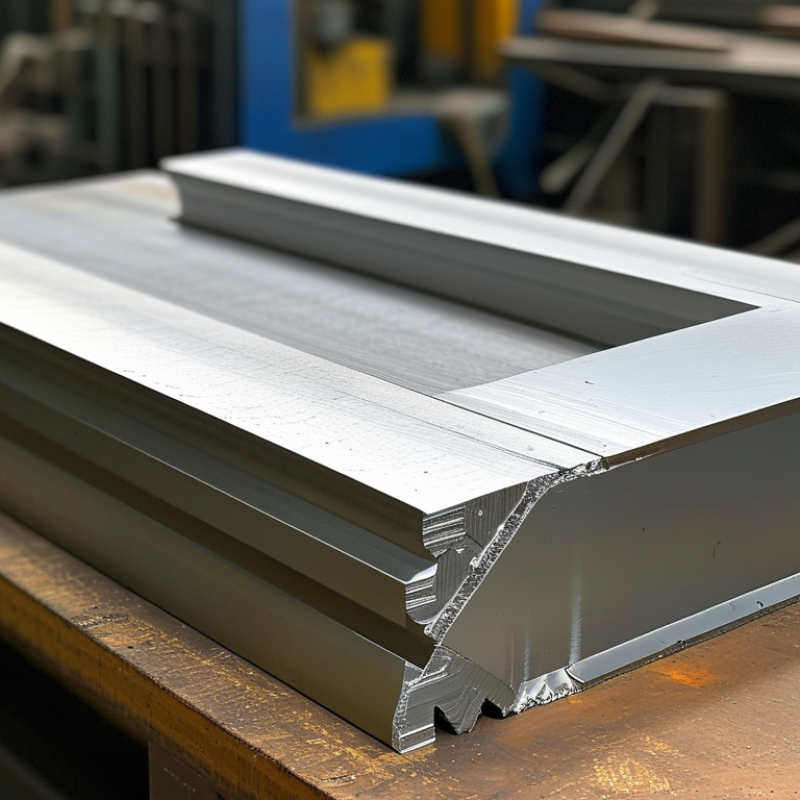
What Are Aluminum Extruded Profiles?
Aluminum extruded profiles are shaped sections made by pushing heated aluminum billet through a precision die. The die creates the final cross-section, such as a channel, tube, rail, frame, or heat sink. Unlike cast parts, extrusions often provide continuous geometry and useful strength along their length. They are common in machine guards, solar structures, transport interiors, windows, and industrial equipment. The process is efficient, but it is not magically perfect. Small die wear can change dimensions, surface lines, or corner sharpness.
In practical manufacturing, profile quality depends on alloy selection, billet temperature, extrusion speed, cooling, stretching, and finishing. A professional supplier should explain these controls clearly. It should also provide dimensional inspection records, alloy certificates, and sample approval before mass production. I have found that a drawing alone is rarely enough. Wall thickness, hole position, flatness, and acceptable tolerance must be discussed early. Otherwise, a profile may look excellent but fail during cutting or assembly. That uncomfortable lesson deserves attention.
Tips: Ask how the profile will be used, loaded, joined, and exposed to weather. Request a short trial run before placing a large order. Check a cut sample with calipers, not only photographs. Review coating adhesion and color consistency under natural light. Leave room for design revision; the first version is not always the best one.
How Are the Top Manufacturers Ranked in 2026?
Ranking the top aluminum extruded profile manufacturers in 2026 requires more than comparing production volume. A credible review examines alloy consistency, dimensional accuracy, surface quality, and documented delivery performance. Inspectors should check sample profiles with calipers, coating gauges, and hardness testers. Small deviations can affect window frames, solar structures, and machine assemblies.
Manufacturers earn higher positions when their quality systems are independently audited and their testing records remain traceable. Useful evidence includes batch certificates, process-control reports, and corrective-action records. Energy efficiency also matters. Modern extrusion lines may use recycled aluminum, heat recovery, and lower-waste die designs. However, environmental claims need measurable data, not polished language.
Customer experience must be measured carefully. Reliable suppliers communicate die-development changes, protect drawings, and explain delays before shipment. A practical ranking should compare lead times across ordinary and custom orders, not rely on one successful project. Financial stability and technical support deserve attention as well. Still, no ranking is perfect. Public information can be incomplete, and factory visits may show ideal conditions rather than daily performance. Independent samples and long-term customer references can expose that gap. Cost should remain important, but the cheapest profile may create higher machining, replacement, or installation expenses later. Real expertise appears in repeatable results, honest limitations, and measured responses when production goes wrong.
Which Companies Lead the Global Aluminum Extrusion Market?
In 2026, global aluminum extrusion leadership depends on more than press size. The strongest manufacturers combine billet quality, precise tooling, automated inspection, and reliable finishing lines. They serve construction, transport, solar, electronics, and industrial equipment markets with different tolerances. That flexibility matters. A high-capacity plant may still fail when dies wear quickly or deliveries cross several borders.
Market leaders typically operate near major customer regions, including North America, Europe, East Asia, and Southeast Asian hubs. Their advantage comes from integrated casting, extrusion, anodizing, powder coating, fabrication, and logistics. Technical teams monitor alloy chemistry, profile straightness, wall thickness, surface defects, and temper performance. Independent testing and traceable batch records strengthen buyer confidence. Energy use also shapes competitiveness, especially when customers request lower-carbon aluminum and verified environmental data.
Yet ranking these companies is not simple. Public capacity figures can hide idle presses, outsourced finishing, or uneven regional quality. My assessment would weigh on-time delivery and corrective-action speed as heavily as annual output. A manufacturer that responds within hours can protect a project better than a larger rival. Still, this view needs caution. Exchange rates, tariffs, and construction cycles can change the market quickly. Buyers should compare audited data, sample profiles, lead times, and tooling ownership before selecting a supplier.
What Products and Industries Do These Manufacturers Serve?
2026 Top Aluminum Extruded Profiles Manufacturers: Products and Industries Served
Leading aluminum profile manufacturers serve more than construction projects. They produce window frames, curtain-wall sections, door systems, heat sinks, machine rails, solar mounting rails, and custom structural parts. Grand View Research estimates that the global aluminum extrusion market could grow at about 7% annually through 2030. That growth reflects wider demand for lightweight, corrosion-resistant components.
Construction remains a major customer, especially for thermally broken profiles and high-strength façade systems. Transport companies use extrusions for vehicle frames, battery enclosures, seat structures, and rail interiors. The International Energy Agency reports that electric car sales exceeded 17 million worldwide in 2024. This shift increases demand for lighter components and reliable thermal management. Solar manufacturers also need long, precise profiles for panel frames and ground-mounted systems.
Industrial buyers often request tighter tolerances, CNC machining, anodizing, powder coating, or special alloy selection. Electronics suppliers may require finned heat sinks with consistent contact surfaces. Automation companies prefer modular T-slot profiles because they support quick assembly and later changes. However, product claims deserve careful checking. “Custom” does not always mean fully engineered. Die design, batch traceability, surface testing, and dimensional inspection can separate a dependable supplier from an attractive catalog. The lines are not always clean. That deserves more attention in 2026.
How Should Buyers Choose an Aluminum Profile Manufacturer?
Choosing an aluminum profile manufacturer starts with your application, not a sales ranking. Define the alloy, temper, dimensions, surface finish, and expected annual volume. A reliable supplier should explain why 6063 or 6061 fits your design. They should also question unsuitable tolerances.
Ask for production evidence. Review extrusion equipment, die-making capability, heat-treatment controls, and inspection methods. Request sample profiles cut from normal production, not only polished demonstration pieces. Check dimensions with calibrated tools. Examine corners, wall thickness, straightness, color consistency, and surface marks. Small defects often become expensive during assembly.
Traceability matters. Each batch should connect to material records, process data, inspection results, and packing details. Request test reports that identify standards, testing dates, and sample numbers. A serious manufacturer can discuss corrective actions when results fail. That conversation reveals more than a perfect brochure.
Visit the facility when possible. Observe storage conditions, die maintenance, packaging, and how workers prevent profile damage. Ask about lead times during peak seasons. A low quotation may exclude tooling, finishing, testing, or protective film. We once treated a clean sample as proof of stable quality; later, batch variation challenged that assumption. It was a useful warning. Buyers should compare total cost, communication speed, technical support, and after-sales responsibility, rather than choosing the cheapest offer. Supplier capability should match the project’s risks.
2026 Top Aluminum Extruded Profiles Manufacturers: How Should Buyers Choose?
This buyer scorecard uses a practical 100-point weighting model. Quality and certification receive the highest priority, followed by dimensional capability, alloy consistency, tooling lead time, surface finishing, logistics, and sustainability. Buyers can adjust these weights according to their project requirements.
FAQS
: They are shaped aluminum sections made by pushing heated billets through a precision die. Common forms include channels, tubes, rails, frames, and heat sinks. Their geometry stays continuous along the profile length.
They appear in machine guards, solar structures, transport interiors, windows, and industrial equipment. Their light weight and useful strength support many designs. Not every profile suits every load.
Alloy choice, billet temperature, extrusion speed, cooling, stretching, and finishing all matter. Small process changes can affect wall thickness, flatness, or corner sharpness. The process is not magically perfect.
Share the drawing, application, expected loads, joining method, and weather exposure. Specify wall thickness, hole positions, flatness, and acceptable tolerances. A drawing alone is rarely enough.
Request a short trial run before placing a large order. Check cut samples with calipers, not photographs alone. Inspect dimensions, holes, flatness, and visible surface lines. Measure it.
Request alloy certificates, dimensional inspection records, and sample approval documents. Process-control reports and corrective-action records can reveal production discipline. Traceability matters when problems appear later.
Compare alloy consistency, dimensional accuracy, surface quality, delivery performance, and technical support. Review ordinary and custom-order lead times separately. Production volume alone proves little.
Consider recycled aluminum, heat recovery, and lower-waste die designs. Ask for measurable data instead of polished environmental language. Claims need evidence.
No. Public information may be incomplete, and factory visits can show ideal conditions. Independent samples and long-term references provide stronger evidence. A ranking can still mislead.
Not necessarily. A cheaper profile may increase machining, replacement, or installation costs. Evaluate total performance, delivery reliability, and support. The first version may need revision.
Conclusion
Aluminum Extruded Profiles are precision-shaped components produced by forcing heated aluminum alloy through a customized die. They are valued for their lightweight structure, corrosion resistance, strength, recyclability, and design flexibility, making them essential in construction, transportation, renewable energy, electronics, machinery, and industrial equipment. This article explains how leading manufacturers in 2026 can be evaluated through production capacity, alloy quality, extrusion technology, dimensional accuracy, surface finishing, customization capabilities, certifications, delivery reliability, and customer support.
It also compares the types of products and industries served by top global suppliers, including architectural frames, heat sinks, structural sections, solar mounting systems, vehicle components, and specialized industrial profiles. For buyers, the best choice depends on technical requirements, order volume, tooling support, quality-control procedures, total cost, sustainability practices, and long-term service. A careful assessment of these factors helps buyers select a dependable manufacturer that can deliver consistent performance and practical value.

 Aoli Aluminum