2026 Top Industrial Aluminium Profile Suppliers Worldwide

Time:2026-11-22 Author:Liam
0%

Choosing a supplier for an Industrial Aluminium Profile is not just a price comparison. A profile may look clean in a catalogue, yet small differences in wall thickness, straightness, or surface finish can affect assembly on the factory floor. Real parts matter. In 2026, this guide compares worldwide suppliers through practical factors: extrusion capabilities, alloy options, machining and finishing services, quality controls, delivery reach, and technical support. No single ranking fits every project. A supplier suited to a lightweight equipment frame may not be the right choice for a corrosion-exposed installation or a high-volume production line.

Metallurgist Jürgen Hirsch’s published work on aluminium alloys offers a useful reminder: material selection and processing conditions both influence performance. That is a principle, not a substitute for checking a supplier’s specifications. Buyers should request drawings, tolerances, relevant test data, and clear information about finishes. Ask how changes are managed between sample approval and repeat orders. A polished sample is encouraging. It is not proof of consistent production.

This overview aims to help engineers, procurement teams, and manufacturers ask sharper questions before committing. It considers established producers alongside suppliers with more focused regional capabilities. Some comparisons will remain imperfect; public information is uneven, and a company’s real performance can depend on the application, order size, and communication. That deserves scrutiny. Use the list as a starting point, then verify requirements directly with each supplier.
2026 Top Industrial Aluminium Profile Suppliers Worldwide

Industrial Aluminium Profiles: Products, Uses, and Market Scope

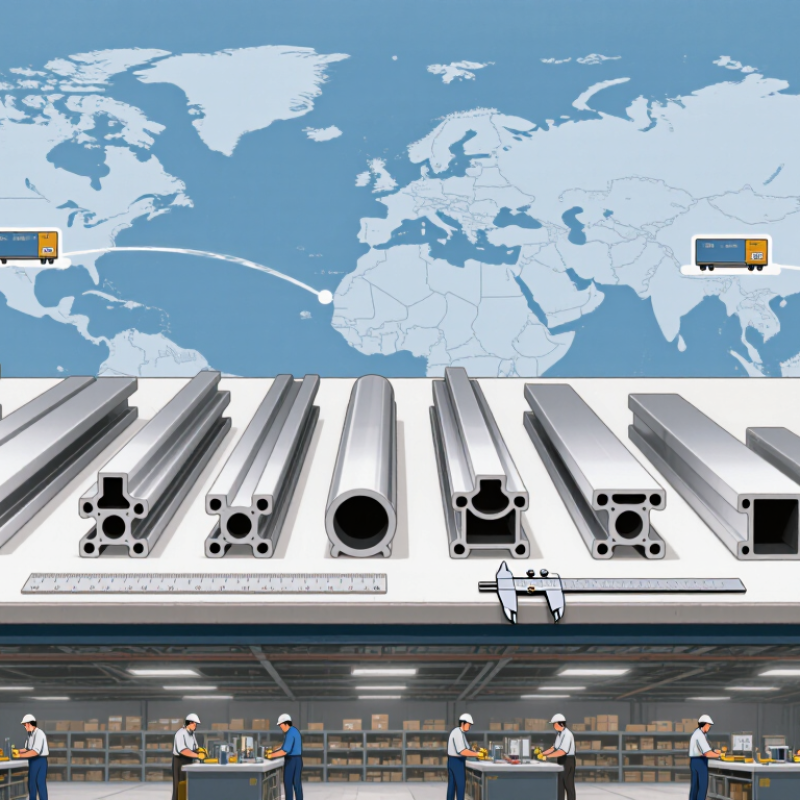
Industrial aluminium profiles are extruded sections shaped for structural, thermal, or assembly tasks. Common products include T-slot framing, channels, tubes, angles, and heat sinks. They appear in factory workstations, machine guards, conveyor frames, building systems, and solar-panel supports. Details matter. A frame beside a cutting line may need stiffness and easy cleaning; an outdoor support needs weather-resistant finishing.

The International Aluminium Institute’s 2023 outlook estimates global aluminium demand could grow from about 86 million tonnes in 2020 to 119 million tonnes by 2030. This is a broad aluminium-demand projection, not a forecast for extruded profiles alone. It signals expanding material use across construction, transport, and electrical applications, but local specifications and substitution options still shape profile demand.

For buyers, market scope includes standard sections and custom extrusions, plus cutting, drilling, machining, and surface treatment. Compare alloy and temper, dimensional tolerances, wall thickness, load requirements, finish, and order volume. A light profile may reduce handling effort, yet prove too flexible under vibration. Not always. Tooling costs and minimum order quantities can make a custom die impractical for small runs. Requesting sample sections and checking fit with actual connectors can expose problems that drawings miss.

2026 Industrial Aluminium Profiles: Global Supply Context

Estimated primary aluminium production in selected major producing countries, 2024 (million metric tonnes). This upstream production measure provides market context; it is not a ranking of profile suppliers.

Source: U.S. Geological Survey, Mineral Commodity Summaries 2025. 2024 figures are estimates; country values are rounded.

How Global Suppliers Are Evaluated and Compared

Comparing industrial aluminium profile suppliers requires more than checking catalog size or quoted price. Start with technical fit: alloy grade, temper, wall thickness, and dimensional tolerances should match your drawing. Ask how dimensions and surface finish are checked across production batches. A polished sample can hide variation. Request inspection records from a recent production run, not just a display piece.

Compare suppliers using the same specification and order quantity. Review material traceability, relevant quality certifications, test reports, packaging details, and stated lead times. For profiles needing drilling, cutting, or special finishes, confirm which steps happen in-house and which are subcontracted. Check how the supplier handles nonconforming parts. Response quality matters, too: clear answers with measurable limits are more useful than broad promises. Supplier rankings are imperfect; a low score on one factor may not matter for every project.

Tips: Send a dimensioned drawing and ask for a sample from normal production. Record actual measurements with suitable tools, then compare them with the agreed tolerances. Keep notes on unanswered questions. Small gaps in the review process can become costly surprises.

Regional Landscape of Aluminium Profile Manufacturing

Regional Landscape of Aluminium Profile Manufacturing

Aluminium profile manufacturing is shaped by regional access to metal, energy, skilled labor, and transport. In East Asia, dense supplier networks can support broad product ranges and high-volume production. Europe often places strong emphasis on process control, traceability, and customized engineering. North America serves varied construction, transport, and industrial needs, with delivery distances influencing supplier choice. These patterns are useful guides, not guarantees.

Across the Middle East, energy access and investment in downstream manufacturing can support expanding production capacity. In South Asia, growing infrastructure demand is encouraging more local processing, though capabilities differ between facilities. A supplier’s region alone says little about dimensional accuracy or finish quality. Ask for alloy and temper records, profile tolerances, surface-treatment details, and realistic lead times. A small mismatch in wall thickness can complicate assembly. Details matter.

Tips: Request a sample cut from a production batch, not only a polished display piece. Check straightness, corner definition, and coating consistency under ordinary light. Confirm how the supplier protects long profiles during shipment. Regional advantages help, but the evidence should come from the actual process. Even a tidy specification can miss practical issues.

2026 Top Industrial Aluminium Profile Suppliers Worldwide - Regional Landscape of Aluminium Profile Manufacturing

Regional comparison of manufacturing capabilities, common product categories, end-use markets, and sourcing considerations. This overview describes regional industry characteristics and does not rank or identify individual suppliers.

Region Manufacturing Landscape Common Profile Products Major End-Use Sectors Regional Strengths Sourcing Considerations
China Extensive extrusion and downstream processing base, supported by a broad domestic aluminium supply chain and large manufacturing market. Standard and custom extrusions, structural sections, heat-sink profiles, window and door systems, and profiles for industrial equipment. Construction, machinery, transportation, electronics, renewable energy, and consumer products. Broad product availability, substantial production scale, and a large ecosystem of finishing and fabrication services. Confirm alloy and temper specifications, dimensional tolerances, surface-finish requirements, testing documentation, and export lead times for each order.
Europe Established extrusion industry serving both building markets and technically demanding industrial applications, with varied capabilities across countries. Architectural systems, precision industrial sections, transport components, thermal-management profiles, and profiles made with recycled content. Construction, automotive, rail, engineering, renewable energy, and electrical equipment. Strong engineering and quality-management practices, mature finishing capabilities, and access to regional transport and manufacturing networks. Check applicable product standards, environmental declarations, recycled-content claims, and country-specific delivery requirements.
North America Regional production and distribution network serving the United States, Canada, and Mexico, with a mix of custom extrusion and fabrication capabilities. Building-system profiles, industrial framing, vehicle components, heat sinks, and sections for electrical and energy applications. Construction, automotive, aerospace, electronics, renewable energy, and general manufacturing. Proximity to major North American customer markets and established capabilities in custom design, fabrication, and technical support. Verify delivery location, cross-border logistics, applicable certification requirements, and the supplier’s ability to meet required production volumes.
India A growing aluminium processing and extrusion sector serving domestic infrastructure and manufacturing demand, as well as export markets. Architectural sections, industrial extrusions, electrical applications, transport components, and profiles for renewable-energy installations. Construction, infrastructure, power transmission, transportation, engineering, and solar energy. Expanding industrial demand and a broadening base of extrusion and downstream processing capabilities. Assess tooling readiness, process controls, inspection records, finishing specifications, and consistency across repeat orders.
Japan and South Korea Technically advanced manufacturing environments with strong links to electronics, transportation, machinery, and precision engineering supply chains. Precision sections, heat sinks, lightweight transport components, electronics housings, and specialised industrial profiles. Electronics, automotive, rail, machinery, energy systems, and industrial equipment. Experience with demanding engineering requirements, close integration with advanced manufacturing, and emphasis on process consistency. Clarify design-change procedures, testing and traceability expectations, tooling ownership, and production schedules for specialised profiles.
Middle East Primary aluminium production is supported in parts of the region by access to energy and export infrastructure; downstream extrusion capacity varies by country. Construction and architectural sections, industrial profiles, transport-related products, and sections for energy projects. Building and infrastructure, oil and gas, transport, utilities, and renewable-energy projects. Regional access to primary aluminium in some markets and established links to infrastructure and export-oriented industries. Distinguish primary-metal availability from local extrusion capacity; confirm conversion, finishing, certification, and shipping arrangements.
Türkiye A significant regional manufacturing base with extrusion and finishing activity connected to European, Middle Eastern, and domestic markets. Architectural systems, construction profiles, industrial sections, and components for transportation and equipment. Construction, building products, automotive, machinery, and export manufacturing. Geographic access to multiple nearby markets and an established base of aluminium processing and export activity. Check destination-market standards, customs documentation, finishing requirements, and the supplier’s experience with the intended application.
Brazil and Latin America Regional aluminium production and processing serve domestic construction and industrial demand; manufacturing capacity and logistics differ considerably by country. Building profiles, general industrial sections, transport components, and profiles for electrical and energy uses. Construction, agriculture, transportation, power, packaging, and general manufacturing. Local-market knowledge and proximity to customers in major Latin American economies. Evaluate local production capability, raw-material sourcing, transport routes, import requirements, and supply continuity for cross-border projects.

Buyer checklist: Compare suppliers using the required alloy and temper, profile dimensions and tolerances, mechanical properties, surface treatment, inspection and traceability records, tooling terms, production capacity, delivery location, and total landed cost. Regional descriptions are qualitative; capabilities vary by supplier and facility.

Leading Industrial Aluminium Profile Suppliers Worldwide in 2026

Leading industrial aluminium profile suppliers worldwide in 2026 are judged by more than catalogue breadth. Buyers typically compare alloy options, extrusion tolerances, production capacity, and the ability to supply repeatable batches. A profile that looks correct on a drawing may still require adjustment if its wall thickness varies or its slots do not fit standard fasteners. Ask for dimensional inspection records and material certificates, then review samples against the intended load and assembly method. Small details matter.

Global suppliers also differ in machining, finishing, packaging, and delivery support. Check whether the supplier can provide cut-to-length sections, drilled features, or protective surface treatments without disrupting production schedules. For cross-border orders, clarify packaging dimensions, lead times, and how design changes are documented. These checks help reduce avoidable delays, though they cannot remove every risk. A polished catalogue proves little. Supplier claims should be tested against sample parts, clear specifications, and documented quality procedures. Price still matters, but the lowest quotation may exclude tooling, finishing, or inspection costs. That comparison is not always straightforward.

Supplier Capabilities, Applications, and Selection Factors

Industrial aluminium profile suppliers differ in more than press size. Buyers should check alloy and temper options, die-design support, extrusion capacity, machining, and surface finishing. Ask for dimensional inspection records and traceability for each production batch. Small details matter: a slot that is slightly narrow can slow assembly across an entire production line.

Applications set the real requirements. Machine frames need straight profiles and dependable connector fit; conveyor systems may require repeatable cuts and drilled holes. Outdoor structures need finishes suited to moisture and exposure. The International Aluminium Institute recorded about 70.6 million tonnes of global primary aluminium production in 2023, reflecting the scale of this supply chain. Scale alone is not proof of supplier fit. A polished catalogue still proves little.

Compare suppliers using sample parts, stated tolerances, lead times, and documented quality checks. Ask how they handle design changes and nonconforming batches. The IAI reports that recycling aluminium uses about 95% less energy than primary production, so recycled-content options may matter to buyers tracking material impacts. Request the basis for any recycled-content claim. It is easy to overlook packaging, scrap handling, or finishing limits during evaluation; those gaps can surface late.

FAQS

What are industrial aluminium profiles?

They are extruded sections used for structural, thermal, or assembly tasks. Common forms include T-slot frames, channels, tubes, angles, and heat sinks.

Where are these profiles commonly used?

They appear in factory workstations, machine guards, conveyor frames, building systems, and solar-panel supports. A machine frame may need straight sections and reliable connector fit.

What should buyers compare before selecting a profile?

Compare alloy, temper, wall thickness, tolerances, finish, load needs, and order volume. A light section can be easier to handle but too flexible under vibration.

When is a custom extrusion worth considering?

Custom sections can match specific dimensions or assembly needs. Tooling costs and minimum orders may make them impractical for small runs. Not always.

How can buyers check whether profiles will fit their assembly?

Request sample sections and test them with the actual connectors. Drawings can mislead. A slightly narrow slot may slow an entire production line.

What supplier capabilities should buyers review?

Check die-design support, extrusion capacity, machining, finishing, inspection records, and batch traceability. Ask how the supplier handles design changes and nonconforming batches.

What matters for profiles used outdoors?

Choose a finish suited to moisture and exposure. Ask for details about the finish, since a catalogue image cannot show how it performs outside.

Does aluminium’s market outlook predict demand for extruded profiles?

No. A broad industry outlook projects rising aluminium demand, but it is not a profile-specific forecast. Local specifications and substitute materials still matter.

How can buyers assess recycled-content claims?

Request the basis for the claim and check how scrap and packaging are handled. Recycling aluminium uses substantially less energy than primary production, but I would recheck the details.

Conclusion

This overview explores the role of Industrial Aluminium Profile products in modern manufacturing, from their common shapes and material characteristics to their use in machinery, construction systems, transport, and equipment frames. It also explains how suppliers can be compared through practical considerations such as product range, dimensional consistency, customization options, production capacity, technical support, and delivery reliability.

The article surveys regional manufacturing strengths and outlines the capabilities buyers may encounter among leading suppliers worldwide in 2026, without treating any single provider as suitable for every need. It concludes with guidance on matching supplier expertise to application requirements, including load demands, operating conditions, finishing preferences, and project timelines. A careful evaluation of these factors can help organizations identify dependable supply options and make informed sourcing decisions.

Liam

Liam

Liam is a dedicated marketing professional with a profound expertise in the industry, where he excels at highlighting the unique advantages of our core products. With a keen understanding of market trends and consumer needs, Liam frequently updates our company’s professional blog, providing......