Slim Profile Aluminum is easy to underestimate. A narrow frame may look simple, yet its performance depends on alloy selection, wall thickness, extrusion tolerances, temper, and surface finish. For global buyers, choosing a supplier means checking more than a polished catalog. It means asking how a supplier controls these details across repeat orders.
The International Aluminium Institute’s 2021 Aluminium Sector Greenhouse Gas Pathways to 2050 report estimated that the industry produced about 1.1 billion tonnes of greenhouse-gas emissions in 2018, roughly 2% of human-caused emissions. That figure adds context to sourcing decisions: recycled content, process transparency, and credible environmental documentation deserve scrutiny alongside price and lead time. Numbers help. They do not replace factory checks.
Materials scientist Mark Miodownik’s work offers a useful reminder: material choices shape how products perform and how people experience them. This is a paraphrase of his broader argument, not a direct quotation about slim-profile extrusion. Buyers should still test every claim against drawings, samples, and inspection records. A supplier’s stated tolerance is not proof of consistent production. And finish matters. A small scratch can stand out across a long, visible frame.
This guide compares ten suppliers for global purchasing teams. It considers product range, customization, quality evidence, communication, and export readiness. The shortlist is a starting point, not a verdict. Supplier fit depends on the application, and some details are easy to miss.
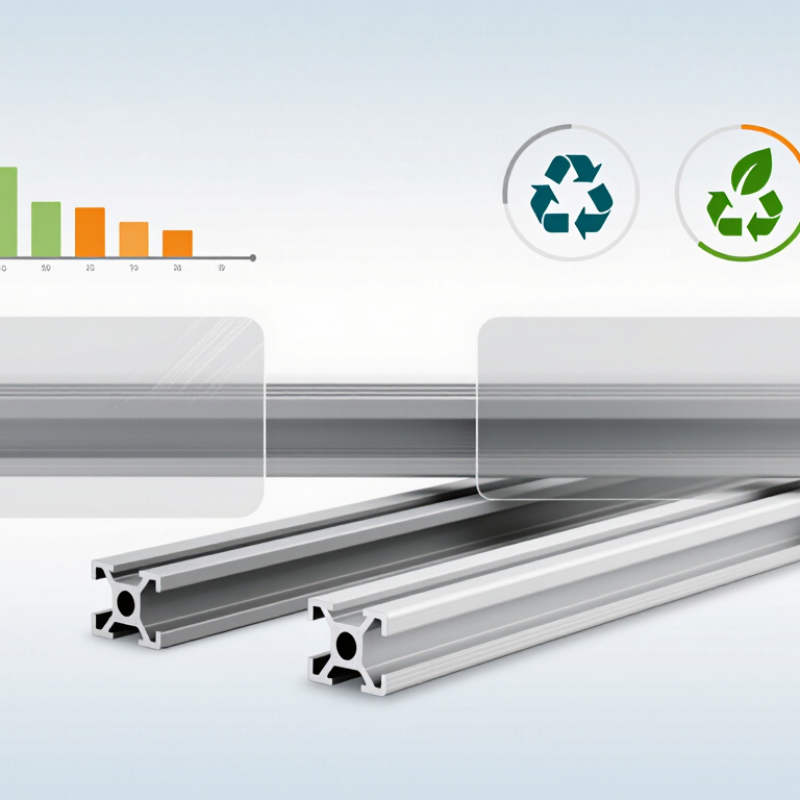
Slim profile aluminum describes extruded sections designed to keep visible frame widths narrow while maintaining structural support. “Slim” has no universal dimensional standard; suppliers may measure the sightline, face width, or complete frame differently. Ask for section drawings and tested performance data, not just a catalogue label. A useful caveat.
The International Aluminium Institute projected global aluminium demand could grow by nearly 40% between 2020 and 2030, requiring about 33 million additional tonnes. This is a broad market forecast, not a slim-profile sales estimate. Still, it reflects expanding material demand across construction and other industries. Buyers should compare alloy, temper, wall thickness, and finish against the intended load and environment.
In buildings, narrow sections commonly frame windows, sliding doors, glazed façades, and interior partitions. They allow more visible glass, but larger panes also increase demands on deflection control, seals, and hardware. On a shop floor, small differences in extrusion straightness or coating can affect assembly and sightlines. Thermal-break designs reduce heat transfer through frames; performance depends on the complete tested assembly. Slim sections also appear in display systems and equipment enclosures, where low weight and clean edges matter. The details are easy to overlook.
Global buyers should evaluate slim profile aluminum suppliers beyond catalog photos and low quotations. A polished website proves little. Request alloy certificates, dimensional reports, and recent production samples. Check wall thickness, straightness, surface finish, and tolerance consistency. A reliable supplier explains its extrusion process clearly. It should also identify inspection equipment, testing frequency, and corrective actions. Ask whether the sample matches mass production. Small differences can create serious assembly problems.
Experience becomes visible during difficult conversations. Discuss minimum order quantities, tooling ownership, lead times, packaging, and shipment protection. Strong suppliers provide realistic schedules, not attractive promises. Verify export experience through documented references and factory audit records. Review certifications carefully, including their issuing bodies and validity dates. Communication matters too. Slow or vague replies may signal weak internal control. Still, no supplier is perfect. Even capable factories can miss a deadline or misunderstand a drawing. Written specifications reduce that risk.
Tips: Send a complete technical drawing with alloy, temper, finish, tolerance, and packing requirements. Ask for a first-article inspection report before approving full production. Compare at least three quotations, but do not choose by price alone. Keep a small test order when possible. It reveals more than a sales presentation. Record every deviation, even minor scratches or uneven anodizing. These details help measure improvement and protect future purchasing decisions.
Global buyers often judge slim profile aluminum suppliers by more than catalog width. Alloy consistency, tooling control, and export documentation matter equally. The following ten supplier profiles reflect practical purchasing needs across construction, lighting, furniture, and industrial assembly.
Ten different strengths. No single supplier fits every project.
Experienced buyers should request samples, dimensional reports, surface-finish records, and packing photographs. Ask how warping, scratches, and die lines are handled. Those small details often decide installation speed. Lead times can change during peak seasons, so written production milestones are useful. Some suppliers advertise broad capabilities but provide limited evidence. That deserves a second review. A careful comparison should examine minimum order quantities, correction policies, inspection methods, and destination-country requirements before any long-term agreement.
10 Best Slim Profile Aluminum Suppliers for Global Buyers
Comparing Product Quality, Customization, Pricing, and Lead Times
Choosing among ten slim profile aluminum suppliers requires more than comparing catalog prices. Experienced buyers should request alloy certificates, dimensional reports, and finish samples before approving production. A reliable supplier should hold tight tolerances along the full extrusion length, not only near the cutting point. Check corners, wall thickness, anodizing consistency, and surface scratches under bright light. Small defects become obvious on long architectural trims.
Customization can include profile geometry, drilling, cutting, powder coating, anodizing, and protective packaging. Ask whether tooling charges are refundable after reaching a stated volume. Confirm minimum order quantities and sample fees in writing. A supplier offering every service may still lack depth in one area. That deserves scrutiny. Send a detailed drawing with tolerance requirements, packing photos, and acceptable color variation. Vague specifications create expensive arguments later.
Pricing should include tooling, finishing, inspection, inland transport, and export packing. A low unit price can hide costly setup fees or weak packaging. Compare identical aluminum grades and finish standards. Lead times also need careful testing. Ask for sample timing, production capacity, holiday closures, and shipping options separately. In my experience, a promised twelve-day schedule may exclude surface treatment and port handling. Build a buffer. Even strong suppliers occasionally miss a sailing or remake imperfect batches. A pilot order can reveal communication speed, packing discipline, and actual quality better than a polished presentation.
Selecting a supplier starts with a clear profile drawing, not a broad request for “slim aluminum.” Specify dimensions, alloy, temper, finish, and intended load. Ask whether the supplier can hold the tolerances your assembly needs, especially around slots and mating surfaces. Share a sample component or a dimensioned sketch when possible. Ask how tooling changes are handled, and request a physical sample before approving a large run. Thin sections can distort during extrusion or machining. Small details matter.
Review quality controls in practical terms. Ask how incoming material, dimensions, and surface finish are checked, and whether inspection records can be tied to each production batch. For anodized or coated parts, confirm the expected color range and how scratches or handling marks are assessed. A polished sample may not represent every production batch, so agree on acceptance criteria in writing. Even careful checks can miss a mismatch; that is worth planning for.
Consider packaging, delivery timing, and technical communication alongside price. Long profiles need support that prevents bending, while finished surfaces need separators or protective wrapping. Ask for realistic lead times, minimum order quantities, and advance notice of delays. A low quote can become costly if profiles arrive damaged or require repeated adjustment. Good suppliers should explain constraints clearly, though no supplier can remove every production risk.
Compare supplier capability types against your project needs. Alloy availability, achievable profile dimensions, tolerances, finishes, and order terms vary by supplier and should be confirmed in a technical quotation.
| Supplier capability profile | Best suited for | Common alloy examples | Relevant capabilities | What global buyers should verify |
|---|---|---|---|---|
| 1. Architectural extrusion specialist | Slim frames, trims, partitions, and façade components | 6060, 6063 | Custom extrusion dies; anodizing or powder-coating coordination | Request profile drawings, dimensional tolerances, finish samples, and confirmation that the proposed wall thickness is extrudable. |
| 2. Precision-profile extruder | Narrow profiles with close dimensional or straightness requirements | 6060, 6063 | Profile measurement and tolerance control; precision extrusion may be specified to standards such as EN 12020 where applicable | Agree on the governing standard, measurement method, inspection plan, and acceptance limits before tooling. |
| 3. Structural extrusion supplier | Load-bearing frames, supports, and equipment structures | 6061, 6005A, 6082 | Structural alloy and temper options; extrusion and secondary machining | Confirm alloy, temper, mechanical-property requirements, applicable product standard, and traceability documentation. |
| 4. Heat-sink and thermal-profile supplier | Lighting, electronics enclosures, and passive cooling components | 6063, 6061 | Custom fin and channel geometries; cut-to-length and machining options | Have the supplier review fin geometry, airflow assumptions, mounting details, and thermal test requirements. |
| 5. Custom-die extrusion supplier | Projects requiring a non-standard slim cross-section | Often 6060 or 6063 for architectural profiles; other alloys depend on design and mill capability | Die design, sampling, and production extrusion | Clarify die ownership, tooling charges, sample approval process, maintenance responsibility, and minimum order quantities. |
| 6. Extrusion and CNC machining provider | Ready-to-assemble parts with drilled, milled, or tapped features | 6061, 6063 | Extrusion, sawing, CNC machining, and deburring | Confirm datum strategy, machining tolerances, burr-control requirements, and whether finishing occurs before or after machining. |
| 7. Anodizing-focused profile supplier | Visible components requiring a consistent anodized appearance | 6060, 6063 | Extrusion with anodizing coordination; architectural alloys are commonly selected for appearance-sensitive applications | Approve production-representative samples and specify color, gloss, coating thickness, sealing, and allowable variation. |
| 8. Integrated surface-finishing supplier | Projects needing extrusion and finishing under coordinated quality control | Commonly 6060, 6063, or 6061, depending on application and finish | Potentially anodizing, powder coating, or other specified finishes alongside extrusion | Check finish specifications, pretreatment controls, test reports, packaging, and responsibility for defects across process stages. |
| 9. Export-oriented extrusion supplier | Buyers importing profiles across borders or serving multiple regions | Alloy selection depends on the end use and market specification | Export documentation, protective packing, and shipment coordination may be available | Confirm Incoterms, lead-time assumptions, country-of-origin documents, packaging method, and responsibility for transit damage. |
| 10. Recycled-content-capable supplier | Projects with documented recycled-material or environmental reporting requirements | Alloy and recycled-content options depend on the supplier's production route and specification | Material sourcing and documentation may be available on request | Request verifiable recycled-content evidence, calculation boundaries, chain-of-custody records, and confirmation that material properties meet requirements. |
Note: These are supplier capability profiles, not named or independently ranked companies. There is no universal dimensional threshold for a “slim profile”; define the cross-section, tolerances, alloy, temper, finish, and inspection criteria in the project specification.
Provide dimensions, alloy, temper, finish, and intended load. A dimensioned sketch is better than a vague request. Include slot sizes and mating surfaces.
Thin sections can warp during extrusion or machining. A sample reveals distortion, scratches, and fit problems. A perfect sample can still mislead.
Request dimensional reports, alloy test records, surface-finish records, and batch inspection details. These documents help connect defects to a specific production run.
Confirm whether the finish is matte, brushed, anodized, or coated. Agree on color limits and scratch standards in writing. Appearance may vary slightly.
Long profiles need firm support to prevent bending. Finished surfaces need separators or protective wrapping. Ask for packing photographs before shipment.
Request written production milestones and realistic delivery dates. Ask how peak-season delays are reported. Timelines can change.
Ask whether unusual cross-sections require dedicated dies. Confirm tooling costs, modification procedures, and sample approval steps. Tooling mistakes can create waste quickly.
Compare minimum order quantities, inspection methods, correction policies, packaging, and delivery terms. A low quote may become expensive after repeated adjustments. Price alone is incomplete.
Probably not. One supplier may excel at lighting channels, while another handles stronger industrial sections. Match capabilities to the project, not the catalog size.
Be cautious when broad capabilities lack samples or inspection evidence. Limited communication can cause small specification errors. That risk is easy to underestimate.
This guide explains what Slim Profile Aluminum is and why its lightweight, streamlined form suits applications such as architectural trim, display systems, lighting, and compact equipment. It outlines the main factors global buyers should assess when comparing suppliers, including material consistency, manufacturing capabilities, quality controls, communication, and experience with international orders.
The article also presents a framework for evaluating ten leading supplier options without relying on a single measure of value. It compares product quality, customization flexibility, pricing, and lead times, helping buyers consider how each factor fits their project’s specifications, budget, and schedule. By clarifying requirements and asking suppliers focused questions, purchasers can make a more informed selection and choose a reliable partner for their particular application.

Aoli Aluminum