Aluminum Profile Extrusion is a practical measure of industrial capability: suppliers must control alloy selection, die design, billet temperature, and finishing quality. Grand View Research estimated the global aluminum extrusion market at about US$87.6 billion in 2023, and forecast a 7.3% compound annual growth rate from 2024 to 2030. These figures describe the wider market, not China alone, but they show why dependable sourcing matters. Small process differences can affect straightness, surface finish, and dimensional consistency. They matter.
For buyers comparing China’s leading suppliers, company size is only one part of the decision. Product range, quality systems, production capacity, customization, and export experience also deserve close review. Aluminum-processing author Dr. John A. S. Green’s work points to a useful principle: “Extrusion quality depends on controlling alloy, temperature, and die design.” This is a paraphrased technical takeaway, not a verbatim quotation. It highlights why supplier claims should be checked against specifications, inspection records, and sample parts. This guide introduces ten Chinese suppliers and the capabilities buyers may want to compare. It is a starting point, not a substitute for technical qualification. A careful shortlist begins with evidence.
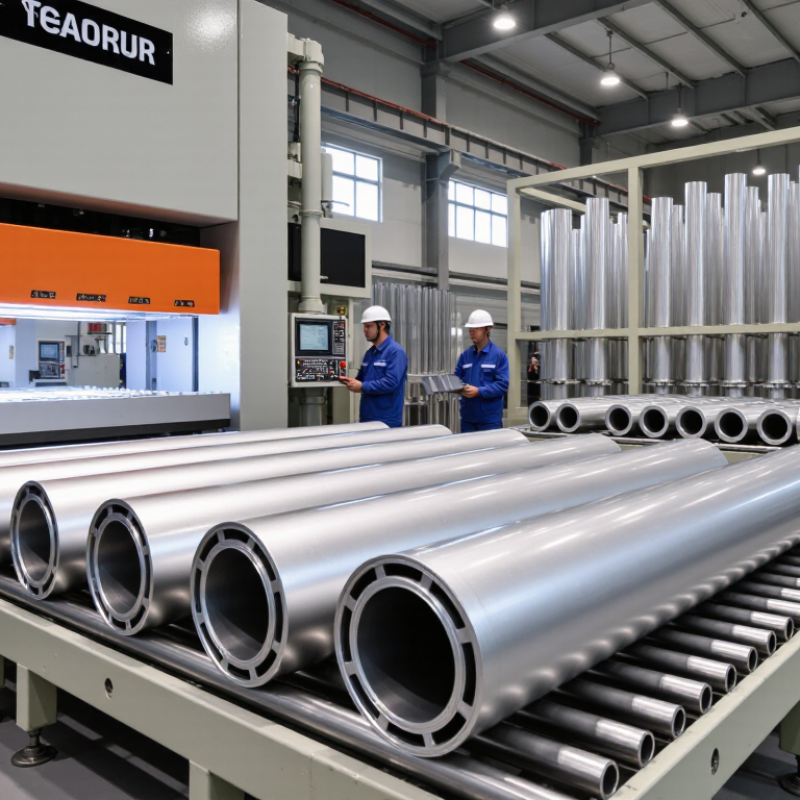
In China, aluminum profile extrusion suppliers are manufacturers that convert aluminum billets into shaped sections for construction, transport, machinery, and interiors. They heat billets, press them through dies, cool the profiles, and cut them to specified lengths. Many suppliers also offer die design, CNC machining, drilling, anodizing, powder coating, and assembly. The difference matters. A factory selling extrusion alone may not control later processes.
From practical sourcing work, I check billet grades, die tolerance, surface treatment controls, and batch traceability before comparing prices. A reliable supplier should explain alloy selection, temper, dimensional limits, minimum order quantities, and production lead times clearly. Ask for inspection records, coating thickness data, and samples from regular production, not only polished showroom pieces. Small details matter. A 0.3-millimeter deviation can affect a sliding frame or machine joint.
Suppliers vary widely in equipment, engineering depth, and export experience. Some operate automated presses and laboratories; others depend on outside machining or finishing workshops. That arrangement is not automatically poor, but it needs written responsibilities and inspection points. I would also verify factory registration, worker safety practices, environmental permits, and independent quality audits where appropriate. No supplier is perfect. Even experienced teams can misread a drawing or underestimate packaging damage. Clear drawings, approved samples, and pre-shipment checks reduce those risks.
The best assessment comes from evidence, not a sales promise.
China Top 10 Aluminum Profile Extrusion Suppliers
How Are China’s Top Aluminum Extrusion Suppliers Selected?
Selecting China’s top aluminum extrusion suppliers requires more than checking production volume or online visibility. A reliable evaluation starts with verified factory experience, suitable extrusion presses, and consistent alloy control. Reviewers should examine whether the supplier handles common alloys, complex hollow sections, and tight dimensional tolerances. The factory floor matters. Clean dies, calibrated instruments, and organized billet storage often reveal operational discipline.
Quality evidence must support every major claim. Auditors can request inspection records, material certificates, sample profiles, and traceability documents. They should also assess anodizing, powder coating, machining, and packaging through physical samples. A 0.2-millimeter deviation may affect assembly. Small details become expensive later. Delivery performance, production capacity, engineering communication, and export documentation also influence the selection. Customer references can add useful evidence, but they should not replace an independent factory assessment.
No ranking is permanently objective. Market data changes, and a polished audit may miss problems between production batches. This is where careful judgment matters. A strong supplier should explain its limitations, not promise perfection. Evaluators can compare defect rates, corrective-action records, testing methods, and response times after sample approval. Environmental practices and worker safety deserve attention too, because responsible production supports long-term reliability. The final list should reflect verified performance, technical fit, and transparent communication rather than advertising strength. Mistakes remain possible. Reviewers should revisit suppliers regularly.
China’s leading aluminum profile extrusion suppliers serve construction, machinery, transport, solar, and interior applications. Their strengths differ, so a simple ranking can mislead buyers. A high-volume supplier may offer competitive pricing, while a smaller factory may provide better attention to custom dies.
The ten strongest supplier profiles usually include architectural extruders, industrial section specialists, precision machining providers, and surface-finishing experts. Some operate modern presses above 2,000 tons. Others focus on narrow profiles requiring tight dimensional control. Buyers should inspect billet quality, die design, straightening methods, and cutting accuracy. Ask for mill certificates and production samples. Check them carefully.
Surface treatment deserves equal attention. Reliable suppliers explain anodizing thickness, powder-coating standards, color variation, and corrosion testing. Packaging also matters. Foam separators, moisture-resistant wrapping, and reinforced pallets can prevent damage during long-distance transport.
I have seen attractive samples fail because packaging was treated as an afterthought. That mistake is expensive.
A practical audit should review factory records, equipment maintenance, inspection reports, and worker training. Confirm whether outsourced processes are clearly disclosed. Request tolerance data for the exact profile, not a general brochure. Delivery promises should include die development and approval time. No supplier is perfect. Even experienced factories can face distortion, shade differences, or delayed tooling. Honest communication about these risks often indicates stronger professional reliability than polished marketing language.
China’s leading aluminum profile extrusion suppliers serve construction, transportation, solar energy, electronics, and industrial machinery. Their product ranges often include standard angles, channels, tubes, frames, and custom sections. Some suppliers also develop thermal-break profiles for windows and curtain walls. Others produce lightweight rails for photovoltaic systems or reinforced frames for automated equipment.
Their services usually begin with technical drawing review and die design. Engineers check wall thickness, tolerances, alloy selection, and production feasibility. Extrusion is followed by cutting, drilling, CNC machining, bending, welding, or assembly. Surface options may include anodizing, powder coating, electrophoresis, and wood-grain finishes. Small samples help buyers verify color, fit, and surface quality before mass production. This step is easy to skip, but it often prevents expensive corrections.
Reliable suppliers provide material certificates, inspection records, dimensional reports, and packing photographs. Many operate testing laboratories for hardness, coating thickness, and mechanical performance. Export support can include pallet design, container loading, documentation, and delivery coordination. Practical sourcing experience shows that communication speed matters as much as equipment. A polished catalogue proves little. Some suppliers excel at complex dies but offer limited fabrication, while others manage assembly better than extrusion. Buyers should compare samples, tolerances, production capacity, and after-sales response instead of choosing by price alone. Mistakes still happen, especially when drawings lack clear measurement standards.
Leading aluminum profile suppliers commonly offer 6000-series extrusion alloys for construction, transportation, industrial equipment, electronics, and renewable-energy applications. The chart compares representative tensile-strength values for widely used profile grades and tempers.
Values are representative reference figures in MPa for commonly specified extrusion products. Actual mechanical properties vary according to the applicable standard, section thickness, temper, and supplier certification.
Choosing the right Chinese aluminum profile supplier requires more than comparing prices. A reliable partner should explain alloy grades, temper conditions, and extrusion tolerances clearly. Ask for recent inspection reports, not general promises. Request samples from the same production line used for your order. Small details matter, such as corner sharpness, surface uniformity, and straightness after cutting.
Visit the factory virtually or in person when possible. Check the extrusion press, aging ovens, powder-coating area, and quality laboratory. A clean workshop is helpful, but it is not proof of consistent production. Review the supplier’s process for handling rejected profiles. Can they trace a batch back to its billet, operator, and inspection record? That answer reveals practical quality control.
Discuss tooling ownership, mold fees, minimum order quantities, packaging, and replacement procedures before signing. Confirm whether the supplier can maintain your required wall thickness across long production runs. Independent testing may be worthwhile for strength, coating adhesion, and dimensional accuracy. Communication also needs testing. Send a technical drawing with several questions and observe the response time and precision. A fast reply can still be vague. I have seen attractive samples hide weak packaging and uneven anodizing. That possibility deserves attention. Build a small trial order, measure every critical dimension, and record the results before expanding production.
| No. | Evaluation Dimension | Relevant Technical Data or Industry Benchmark | What the Buyer Should Check | Priority |
|---|---|---|---|---|
| 1 | Alloy and Temper Capability | Common extrusion alloys include 6063, 6061, 6005A and 6082. T5 and T6 tempers are widely used for architectural and industrial applications. | Request alloy certificates, chemical-composition reports and mechanical-test results for the exact alloy and temper required. | Very High |
| 2 | Applicable Product Standards | Architectural profiles are commonly manufactured according to GB/T 5237 series requirements. International projects may also specify EN 755, EN 12020 or ASTM B221. | Confirm the standard edition, dimensional class, surface-quality requirements and inspection method stated in the purchase specification. | Very High |
| 3 | Press and Die Capability | The required press size depends on profile section, wall thickness, alloy and extrusion ratio. Large industrial profiles generally require higher-tonnage presses than standard architectural sections. | Check available press tonnage, maximum billet diameter, profile envelope, die-design capability and experience with hollow or complex sections. | Very High |
| 4 | Dimensional Control | Permitted dimensional deviations vary according to profile size, wall thickness, shape complexity and the selected standard. Critical dimensions must be defined on approved drawings. | Review inspection plans, calibrated measuring equipment, first-article samples, cross-section reports and statistical process-control records. | Very High |
| 5 | Surface Finishing | Typical finishes include mill finish, anodizing, powder coating, liquid coating and wood-grain transfer. Anodized film thickness and coating class must be specified for each application. | Ask for finish samples, color-control procedures, coating-thickness records, adhesion testing and weathering or corrosion-test results where applicable. | High |
| 6 | Heat Treatment and Mechanical Properties | T5 profiles are cooled and artificially aged after extrusion, while T6 profiles receive solution heat treatment and artificial aging. Strength values depend on alloy, temper and product standard. | Verify tensile strength, yield strength, elongation, hardness and heat-treatment records using samples from the actual production batch. | Very High |
| 7 | Production and Finishing Capacity | Standard commercial extrusion lengths are commonly supplied up to approximately 6 to 12 metres, subject to profile design, transport and processing requirements. | Confirm monthly capacity, number of extrusion lines, finishing-line capacity, cutting accuracy, packaging capability and production lead time at peak periods. | High |
| 8 | Quality Management and Traceability | A reliable supplier should maintain documented controls covering incoming billets, extrusion, aging, finishing, final inspection and nonconforming-product handling. | Request valid management-system certificates, batch traceability samples, corrective-action records and a documented quality-control plan. | Very High |
| 9 | Tooling and Development Support | Custom profiles normally require a dedicated extrusion die. Die life, trial-extrusion procedures and design feedback have a direct effect on development cost and launch time. | Clarify die ownership, die-charge policy, modification terms, trial quantity, design-for-extrusion support and approval procedures for samples. | High |
| 10 | Export, Packaging and Delivery Control | Aluminum profiles are commonly protected with individual wrapping, bundled packaging or palletized loading. Moisture control is important during long-distance sea transport. | Review export experience, packing specifications, container-loading plans, Incoterms, documentation accuracy, delivery performance and claims-handling procedures. | High |
Common applications include construction, machinery, transportation, solar systems, electronics, and interior equipment. Profiles may form window frames, rails, tubes, channels, or machine supports.
Compare alloy knowledge, extrusion capacity, tolerances, tooling support, finishing quality, fabrication services, and delivery control. Price alone can mislead. Compare actual samples.
Request material certificates, inspection reports, dimensional records, coating data, and packing photographs. Ask for tolerance results from the exact profile, not a general brochure.
A suitable die supports accurate wall thickness, smooth surfaces, and stable production. Confirm mold fees, ownership, revision costs, and approval timing before ordering.
Typical options include anodizing, powder coating, electrophoresis, and wood-grain finishes. Check coating thickness, color consistency, adhesion, and corrosion performance using samples.
Review extrusion presses, aging ovens, finishing areas, laboratories, maintenance records, and worker training. A tidy workshop helps, but it proves little.
Place a small trial order and measure critical dimensions. Check straightness, corner shape, surface uniformity, color, hardness, and fit before increasing volume.
Foam separators, moisture-resistant wrapping, and reinforced pallets can reduce scratches and deformation. Request packing photos. Samples can look perfect, then arrive damaged.
Communication reveals how carefully a supplier reads drawings and handles problems. Send detailed technical questions and assess response accuracy, not just speed.
Possible issues include profile distortion, uneven anodizing, color variation, delayed tooling, and weak packaging. No supplier is perfect. Plan inspections anyway.
This article presents a practical overview of China’s top 10 Aluminum Profile Extrusion suppliers and explains how they support customers across construction, transportation, industrial equipment, renewable energy, and consumer product sectors. It begins by defining aluminum profile extrusion suppliers as manufacturers that transform aluminum billets into customized profiles through controlled heating, shaping, cooling, and finishing processes. The selection criteria include production capacity, material quality, dimensional accuracy, technical expertise, certifications, delivery reliability, customization capabilities, and customer service.
The article also compares the products, industries, and services commonly offered by leading suppliers, including standard and custom profiles, cutting, drilling, CNC machining, anodizing, powder coating, assembly, packaging, and logistics support. Finally, it provides guidance for choosing the right Chinese supplier by considering design requirements, alloy options, surface treatment, quality control, minimum order quantities, communication efficiency, lead times, and total project cost. This approach helps buyers make informed decisions and establish stable, long-term cooperation with a suitable manufacturing partner.

Aoli Aluminum