Choosing among China’s leading Aluminium Extrusion Profile manufacturers takes more than comparing prices or browsing polished product photos. A reliable supplier should show control over alloy selection, die design, dimensional tolerances, surface treatment, and quality inspection. Small details matter. A warped section can complicate assembly; an inconsistent anodized finish may stand out across a long façade.
This introduction leads into the practical questions buyers should ask: Which manufacturers serve the required industry? What alloys and profile shapes can they produce? How do they manage samples, production capacity, inspection records, and delivery schedules? Clear answers are more useful than broad claims. Ask for drawings, specifications, and sample parts where appropriate. Check that claims match the documents provided.
One integrity note matters here. John Green, a technical expert associated with the Aluminum Extruders Council, is a relevant industry name, but no source article or verified verbatim quotation was provided for this request. I will not invent a statement and attribute it to him. A useful editorial principle—not a quotation—is: “Match the profile to the job, then verify the process.” Even that needs scrutiny. Buyers should compare suppliers against their actual application, not a generic ranking. The best choice may depend on finish requirements, order volume, tolerances, and communication. There is no universal winner. Manufacturers’ capabilities can change, and published claims should be checked directly before a decision.
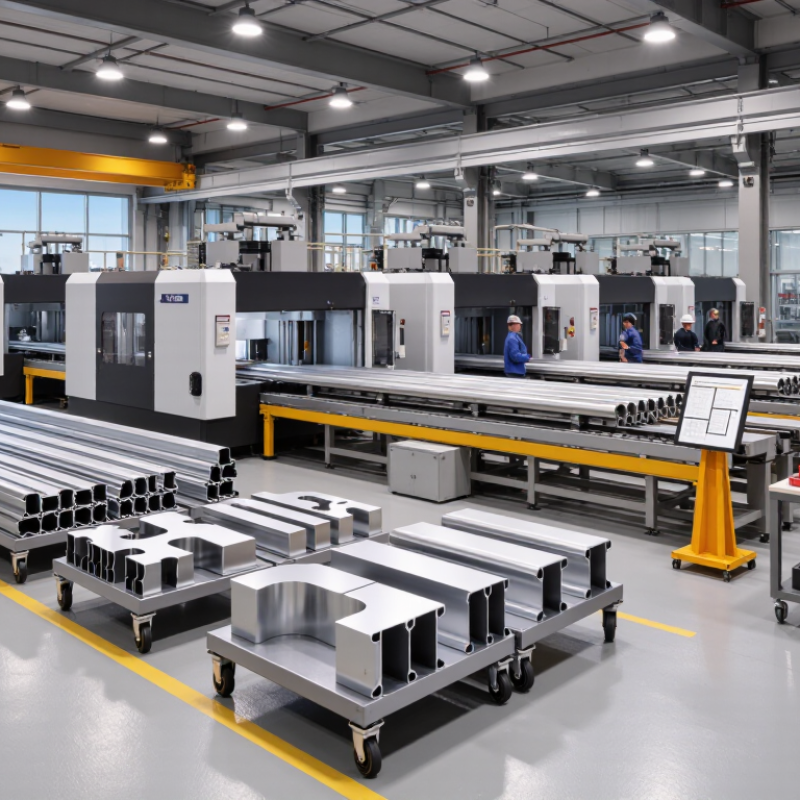
Understanding Aluminium Extrusion Profiles and Their Manufacturing Process
An aluminium extrusion profile is shaped by forcing a heated billet through a steel die. The die opening defines the cross-section, from a simple channel to a hollow frame with several internal webs. Billets are commonly heated to roughly 400–500°C, depending on alloy and production conditions. A hydraulic ram pushes the softened metal through the die. The emerging profile is cooled, stretched straight, cut to length, and heat-treated when required. Small details matter. Die wear or uneven cooling can affect dimensions and surface quality.
The US Geological Survey’s Mineral Commodity Summaries 2025 estimates global primary aluminium production at about 72 million metric tons in 2024. This figure describes primary metal, not extrusion output, but it shows the scale of the material supply behind profile manufacturing. In practice, alloy choice, billet temperature, extrusion speed, and die design must work together. A thin-walled window frame may need different control from a thick industrial rail. There is no universal recipe, which can make process comparisons frustrating. Even a well-designed profile may need adjustment after trial runs; that is an important limitation to acknowledge when specifying tolerances and finishes.
A practical, company-neutral guide to aluminium extrusion capabilities and production. The specifications below are typical examples for product evaluation, not rankings or guarantees; actual limits depend on the alloy, profile geometry, equipment, and agreed inspection requirements.
| Evaluation Dimension | Typical Data or Practice | What It Means for Buyers | What to Verify |
|---|---|---|---|
| Common extrusion alloys | 6063 and 6061 are widely used 6xxx-series aluminium alloys. 6063 is common for architectural and decorative profiles; 6061 is often selected where higher strength is required. | Alloy choice affects strength, formability, surface finish, and suitability for machining or finishing. | Request the alloy designation and a material test certificate for the supplied batch. |
| Common tempers | T5 generally means cooled after a high-temperature shaping process and then artificially aged. T6 generally involves solution heat treatment followed by artificial aging. | Temper affects mechanical properties and should match the profile’s intended use. | Confirm the temper on drawings, purchase documents, and inspection records. |
| Billet heating and extrusion | Aluminium billets are heated before extrusion; operating temperatures vary with alloy, billet size, press, and production conditions. A die shapes the heated material as it is pushed through its opening. | Process control helps produce consistent cross-sections and surface quality. | Ask about process controls, die maintenance, first-article approval, and traceability. |
| Cooling and aging | Profiles are cooled after exiting the die, then may be stretched to help straighten them and heat-treated or artificially aged to achieve the specified temper. | Cooling and heat treatment influence dimensional stability and mechanical performance. | Check the specified temper and the supplier’s inspection method for straightness and mechanical properties. |
| Dimensional tolerances | Tolerances depend on profile dimensions, wall thickness, alloy, and applicable product standard. China’s GB/T 14846 covers dimensional tolerances for aluminium and aluminium-alloy extruded profiles. | Complex or thin-walled shapes may need tighter drawing-specific controls than general tolerances provide. | State the governing standard and critical dimensions on the approved drawing. |
| Profile design and die feasibility | Uniform wall thickness and balanced geometry generally support more consistent extrusion. Deep hollows, thin walls, and sharp transitions can increase die and process difficulty. | Early design review can reduce tooling changes and improve manufacturability. | Request a die-feasibility review and confirm whether the design requires a solid, semi-hollow, or hollow die. |
| Surface finishing | Common options include anodizing, powder coating, and mill finish. The achievable appearance and coating requirements depend on the alloy, surface preparation, and specified finish. | Finish choice affects appearance, corrosion resistance, and suitability for indoor or outdoor use. | Specify colour, gloss, coating or anodic-film requirements, inspection criteria, and any sample approval process. |
| Quality documentation | Typical checks may include dimensions, visual condition, alloy and temper documentation, and mechanical testing where required by the order. | Documented inspection makes it easier to confirm that delivered profiles meet the agreed specification. | Agree on sampling, measurement methods, acceptance criteria, and required certificates before production. |
| Supplier comparison | Useful comparison factors include relevant profile experience, tooling capability, process control, finishing options, inspection systems, lead time, and export packaging. | A capability-based comparison is more meaningful than an unverified “top manufacturer” ranking. | Evaluate suppliers against the same drawing, finish specification, quality requirements, and delivery terms. |
Note: Technical values and requirements should be confirmed against the latest applicable standards, approved drawings, and the specific product specification.
Ask whether engineers can review drawings, identify thin walls, and explain alloy choices. Clear answers matter. A vague promise is not enough.
Match press capacity and die experience to your profile’s size and shape. Ask about heating, quenching, stretching, aging, and cutting. Equipment alone proves little.
Request sample inspection records, material certificates, and traceability details. Check dimensions, straightness, and surface finish on actual parts. Appearance can mislead.
Confirm how the supplier prepares surfaces and controls coating quality. Ask for coating thickness checks and sample parts. Not every shift performs identically.
Yes. Measure critical features against your drawing, rather than judging appearance alone. Record any variation. One sample may not tell the whole story.
Check whether quotes include tooling adjustments, testing, and protective packaging. The lowest price may leave out useful work. Ask before deciding.
Look at work-in-progress, storage conditions, and dimensional checks. A live video review can help when travel is difficult. One visit cannot show every production day.
Confirm moisture protection, secure bundling, loading photos, lead times, and origin documents. Clarify tariff classification and destination requirements. Port delays can still happen.
Ask how the supplier tracks batches, die wear, and corrective actions. Check communication during sampling, too. Slow replies may become costly later. A checklist helps, but it can still miss problems.
This article explains how aluminium extrusion profiles are made by heating alloy billets and shaping them through precision dies, followed by cooling, cutting, and finishing. It outlines practical criteria for evaluating manufacturers in China, including production capacity, engineering support, quality control, customization options, communication, and experience serving export markets. Rather than relying on a single factor, buyers can compare suppliers according to their project requirements, expected volumes, and delivery schedules.
The guide also reviews common profile shapes, alloy choices, surface finishes, and applications across industries such as construction, transportation, machinery, and electronics. It highlights the value of checking relevant quality standards, inspection procedures, packaging, shipping arrangements, and export documentation before placing an order. These considerations can help buyers identify a capable Aluminium Extrusion Profile supplier and reduce sourcing risks while ensuring that products meet their technical and commercial needs.

 Aoli Aluminum